-
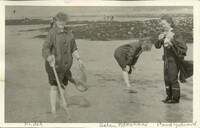 Máirín de Valéra collecting samples on seashore
Máirín de Valéra and two fellow phycologists collecting marine samples on a seashore, with other groups apparently similarly engaged in the background
-
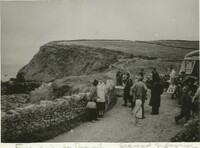 Máirín de Valéra - excursion to Roonagh, 1958
This was an excursion to Clew Bay, with shore collecting, as part of the third International Seaweed Symposium held in the University on August 13-19, 1958. The words, 'Excursion to Roonagh' are pencilled in at the foot, although the words 'Spanish Point 18.8.58' appear on the back; the programme also included an excursion to Spanish Point for 'shore collecting at Miltown Malbay, Co. Clare'. The programme was divided between Botany, Chemistry and Utilisation sections.
-
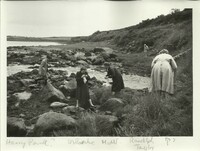 Máirín de Valéra and others collecting marine algae samples
Máirín de Valéra and fellow phycologists collecting samples of marine algae from a rocky seashore site
-
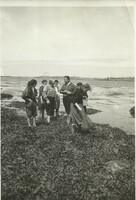 Máirín de Valéra i Roscoff, 1954
Dr Máirín de Valéra with fellow phycologists viewing and collecting samples of algae from the seashore in Roscoff, Brittany in 1954
-
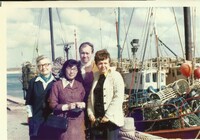 Máirín de Valéra in Roscoff, 1976
Máirín de Valéra with fellow phycologists in the fishing port Port de Moguériec, Roscoff, Brittany in May 1976
-
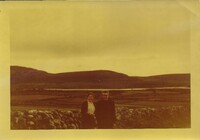 Máirín de Valéra near Finavarra
Dr Máirín de Valéra with Fr J.H. Mullahy, SJ in July 1952 'not far from Finevarra'.
-
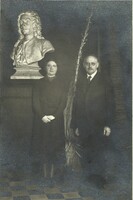 Máirín de Valéra, Lund, 1938
Máirín de Valéra (1912-84) pictured with the phycologist Harald Kylin (1879-1949) in Lund University in 1938, standing in front of a bust of the famous Swedish biologist Carl Linnaeus (1707-78), with a fossilised Equisetum between them. At that time, she was a student at Lund University , enrolling there in 1937 in pursuit of her postgraduate studies, with the support of the NUI Travelling Studentship awarded to her in 1936. She worked under the direction of Kylin and published several papers on algal morphology and physiology.
Máirín de Valéra spent her entire academic career at UCG, as Assistant in Botany (1939-47), Lecturer in Botany (1947-62) and finally as the first Professor of Botany (1962-78). She was elected a member of the Royal Irish Academy (1956). She was a co-founder of the British Phycological Society in 1951 and was elected Vice-President of the Society (1969) and later made a life member (1977).
Despite being the only botanist in the University for many years and her consequent very heavy teaching load, involving the teaching of all courses in the plant sciences through both English and Irish, she continued to pursue her prime research interests in phycology and, through her publications, acquired international recognition for her unequalled knowledge of the marine algae of the west coast of Ireland. Her unique contribution to the University was recognised by the naming, in 2006, in her honour of the Carron Field Research Facility, established by the University in 1975 as a base for research in the Burren; a commemorative plaque was unveiled there
on that occasion by Minister of State Síle de Valera, a niece of hers. The location for the Finavarra marine research field station in Co. Clare on the shores of Galway Bay, established by the University with funding from Clare Co. Council, was also chosen by her.
Johann Harald Kylin was Professor of Botany in Lund University (1920-44) and a renowned phycologist, specialising in the marine algae of the west coast of Sweden.
-
 heavey
-
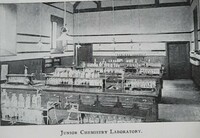 Earlier Laboratories
Four Laboratories are described: Junior Chemistry; Junior Physics; Pathology; and Physiology. With the exception of the Pathology Laboratory, all were housed in the Main quadrangle building of the University. The Pathology Department was transferred to the side wing of the Civil & Electrical Engineering Building which was built in 1914 (Murray, 1999; Univ. Calendar, 1923-4). It was located on the top floor and consisted of three rooms – a museum, a student’s laboratory, and a research laboratory.
The ground floor of the east wing of the Main building housed the Chemistry Department, the Men’s Reading Room and the Greek Hall (originally called the Mechanical and Philosophical Theatre). In about 1932, the Chemistry Department moved to the Model School on Newcastle Road and was there until 1963 (Butler, 1999; O’Connor, 1999).
Space was allocated to the Department of Natural Philosophy / Physics soon after Prof. Anderson assumed the Chair in 1885 (O’Connor, 1999). A Physics Lecture Room, a museum and a laboratory were then housed on the ground floor of the south wing of the Main Building (O’Connor, 1999). It appears that the so-called Junior Physics Laboratory was towards the east of the southern wing, with the ‘non-Junior’ Laboratory [which is shown in Clancy, Jennings, Asset id 14222] towards the west.
The Department of Physiology was located on the first floor of the east side of the Main Building and consisted of three rooms - for experiments, histology work and physiological chemistry (Univ. Calendar 1923-4, p. 44).
Pictures of the four Laboratories were published in the College Handbook, 1915.
-
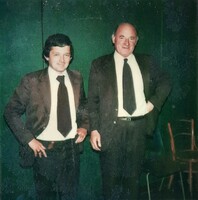 Some Porters from the 1970s to 1990s
Peter Faherty, following in the footsteps of his father, Pádraig Ó Fatharta, became a Porter at the University in 1973, during a period when Eamonn Canny was Head Porter, who took over from Pádraig Ó Fatharta in 1969. Peter was appointed Head Porter in 1977 at a relatively young age and performed his work along with colleagues in the Archway. He with fellow Porters moved out of the Archway in 2003. He remained in the post until 2005, when the post was officially terminated with Peter then becoming Supervisor of Facilities & Services in the North campus, under the aegis of the Buildings Office, before retiring in 2012. The first picture shows Padraig Ó Fatharta with his son Peter, taken in 1977, presumably at the time that Peter became Head Porter.
Some of the other Porters included Pat O’Reilly and Joe Devaney, brother of John who worked in the mail office. The second picture shows Pat O’Reilly, Porter, taken in the Porter’s Office in about 1991. The third picture shows Pater Faherty holding the University Mace at some academic conferring ceremony.
-
 Ó FATHARTA, Pádraig
-
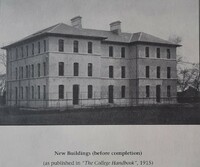 Engineering Building
The picture shows the incomplete Engineering Building (College Handbook, 1915). The Engineering building opened in 1914, containing the School of Civil and Electrical Engineering (Calendar, 1923).
-
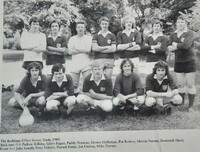 Buildings Office Soccer Team 1980
-
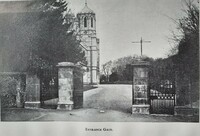 Entrance Gate to the University
The picture shows the entrance gate to the University, which is open. There is a mounting on top of the two central stone pillars. Smaller gates are positioned between the central and outer pillar on both sides of the entrance. The clock tower is visible in the background.
-
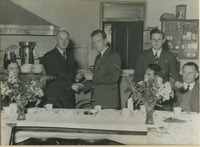 Mayor Greene at UCG
The caption on this image in the University Archives is simply, 'Mayor Greene at UCG', with no information on the occasion, location, date or the persons shown. Peter Greene (1895-1963) was Mayor of Galway from 1954 to 1960; hence the image can be dated to that period of his as Mayor. He is the man standing on the left.
From the brief caption ('at UCG'), it can be deduced with confidence that the location was the kitchen area of the old Coffee Shop. That was the only location on campus at the time where staff and students could get tea and coffee.
-
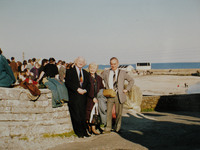 A fine day on Aran with Michael D. Higgins, April 1994
On the left is Michael D. Higgins, who was at the time Ireland’s first Minister for the Arts. In the middle is Mary Imbusch, née O'Donnell, and beside her is her husband Frank Imbusch, Professor of Physics. The photo was taken on Inishmore at the launch of 'The Book of Aran', an event which was attended by a large number of people living on the island, by staff from NUI Galway and notable political figures.
-
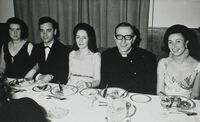 Science Dress Dance, 1970
The people seen here are, from left to right: Mrs Mary O'Driscoll, Lady Superintendent; Frank Imbusch, Lecturer in Physics and later Professor; Mary Imbusch, née O'Donnell; Fr Tom (Pops) Kyne, Dean of Residence; and Daidin Ó hEocha, née Fahy.
The Deans of Residence, all men, were appointed to cater for the needs of students of various religious persuasions. After the Synod of Thurles (1850) forbidding Catholic clergymen to hold office in the Queen's Colleges, all Catholic Deans of Residence resigned. The result was anomalous. In 1899-1900 in Galway, for example, there were deans for members of the Church of Ireland, for Presbyterians and for Wesleyan Methodists, but none for Catholics. In the same year the religious persuasion of the student body was recorded as 15 Church of Ireland, 48 Roman Catholics, 41 Presbyterians, 4 Wesleyan Methodists, and 2 ‘Various’. (President’s Report, p. 9)
In the Irish Universities Act of 1908, the Statute for the university in Galway stipulated that there should be a Lady Superintendent and it set out her duties in detail (Chap. XXIV), as well as her remuneration and pension. It required all women students to 'enter under the Lady Superintendant'. By the time Mrs O'Driscoll was appointed, that rule does not seem to have been stringently enforced. Many graduates of the 60s and 70s recollect her with affection, as has been recorded by Jackie Uí Chionna (Oral History, 2019).
-
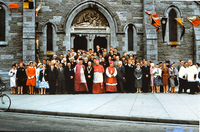 Pax Romana Congress, Galway, 1959
The two members of the Catholic hierarchy on either side of Mayor Peter Greene are, from left to right, Monsignor Pádraig de Brún, President of UCG (1945-1959), and Rt. Revd Dr Michael J. Browne, Bishop of Galway and Kilmacduagh (1937-1976). Near the back, 2nd from the left in the 2nd-last row, is Tom O'Connor, Lecturer in Physics.
The church behind the group is St. Joseph's Catholic Church on Presentation Road, recorded by the National Built Heritage Service as having been built in 1880-1885.
The Pax Romana has a graduate branch, the International Catholic Movement for Intellectual and Cultural Affairs (ICMICA-MIIC), and a student branch, the International Movement of Catholic Students (IMCS). A brief account of its development is provided on the website of the Newman Association (Lambert 2013).
-
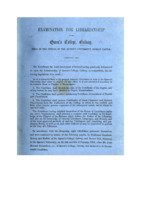 Examination for Librarianship, Queen's College, Galway, 1856
The four examination papers set for the post of Librarian in Queen's College, Galway, on 8 and 9 January 1856. Eight candidates took the examination. The successful candidate was 'Mr. John Howard Richardson, A.B., of Queen's College, Galway'. He was to hold the post from 1856 to 1877. During his time as Librarian he produced the first printed catalogue of the books held by the Library.
-
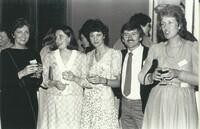 Administrative Staff Graduates' Reunion, 1985
Administrative Staff Graduates attending their second annual reunion in the Aula Maxima in September 1985
-
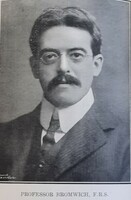 T. J. l’A. Bromwich, Professor of Mathematics
Thomas John l’Anson (T.J. l’A.) Bromwich was educated in Durban High School, South Africa. He graduated from St. John’s College, Cambridge as senior Wrangler in 1895. He was appointed Chair of Mathematics in Queens College Galway (Q.C.G.) in January 1902 and had published some forty research papers by 1906 (Q.C.G. Magazine, 1906). His research was recognised through his election to a Fellowship of the Royal Society in the same year. His picture is reproduced from the Q.C.G. Magazine, 1906 issue. He resigned from Q.C.G. in 1907 to take up a Lectureship in St. John’s College, Cambridge (S. Tobin, 1999. He died by suicide in 1929.
-
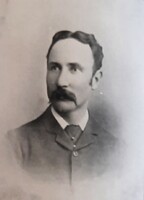 Philip Sandford, Professor of Latin
Philip Sandford, born in Clonmel, son of a Church of Ireland clergyman, went to Trinity College Dublin where he distinguished himself in Classics, English and Metaphysics. Then, he spent some time in South Africa (Keaveney, 1999). He became Professor of Latin in Queens College Galway (Q.C.G.) in 1890. Some of his research publications are quoted by Keaveney. He was skilful in playing tennis, having being tennis champion in Natal, South Africa and became tennis champion at Q.C.G. as well. He was also a keen supporter and member of the Debating Society. He contracted rheumatic fever in July 1903 (Q.C.G. Magazine, 1903) and died on 2 Aug., of the same year, aged 48 years (irishgenealogy_1903). His obituary appeared in a Supplement to Q.C.G. magazine (Q.C.G., Nov.,1903). His picture is reproduced from that magazine issue.
-
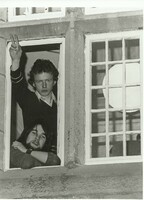 Student Occupation of President's Office, 1982
These are two of the students involved in an occupation of the President's Office on the second floor of the southwest corner of the Quadrangle, part of a group of 13 representing the Students’ Union . The occupation was initially meant to last 24 hours, but was extended from May 12 to May 21 in response to the actions of the college authorities in cutting off student phones, closing the Students' Union Bar, and attempting to cut off the nursery allowance. The occupation was in protest at the proposed increase in fees and cutbacks in essential Student Services. According to the Union's account, 1,000 students marched in support of the occupation on the eve of their examinations, but the increase in fees still went through.
-
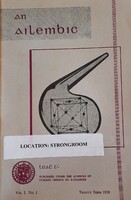 Science Magazines
Cumann Ceimice na Gaillimhe was founded in 1949 and was responsible for the publication ‘An Ailembic’ translated as ‘distillation’ which was first published in The Trinity Term of 1958. It ceased production in 1960. The Science Society produced ‘SPEICTREAM’ in 1966 and it continued for a few years. CRYSTAL was published by An Cumann Ceimice in 1968, which continued in production until 1981. Front covers of the three scientific magazines are shown.
-
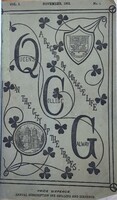 Earlier University Publications
The earliest known University magazine is that of Queens College Galway (Q.C.G.) publication that appeared in November 1902 entitled ‘A Record of College Life in the City of the Tribes’. The Vol. 1, No. 1 Editorial is shown here, as well as its front cover, which shows the University Arms and a picture of the University. It was published three times in the Collegiate year.
This was followed by the 'U.C.G. Annual' – the 1946 front cover is shown here. It later became known as the 'U. C. G. College Annual', as shown for the year 1957 – 58.
A magazine 'College Clarion' was produced in Dec. 1948, as shown by its front cover. It is not known if further issues were published.
