-
LARKIN, Patrick ('Patt')
-
TOBIN, Seán
-
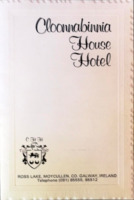 Menu of the celebration dinner for Seán Tobin, 1990
The menu for the 1990 dinner held in honour of Seán Tobin, professor of Mathematics, to celebrate his 60th birthday. Shown here: outer cover, guests' signatures, menu.
Among those present were many distinguished mathematicians as well as members of Professor Tobin's family and circle of friends.
The menu itself, devised by Seán Tobin's colleague, James Ward, makes ingenious use of equations and values based on the guest of honour's initials, to reflect his primary mathematical interests.
-
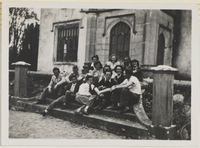 A cycling outing, c. 1947
For undergraduates in Galway, cycling expeditions were a popular activity in this period. Among those present in this photo is Una O'Cleary (2nd row, last on right), who graduated with a Bachelor of Arts degree in 1950.
-
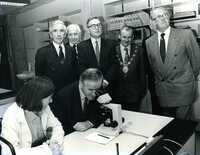 Opening of the Clinical Science Institute, 1992
The Clinical Science Institute is located on the grounds of University College Hospital, Galway. The Hospital, being designated as a 'teaching institution', the local authority was required to provide research facilities. The resulting institute was officially opened by the then Taoiseach, Mr Albert Reynolds in 1992.
Pictured here, from left to right, are:
Standing: John Flynn; Unidentified; Charles Eugene (Gene) Connolly; Henry O'Connor; Colm Ó hEocha.
Seated: Unidentified medical student; An Taoiseach Albert Reynolds
-
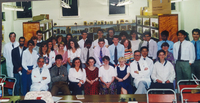 Old Pathology Museum, NUI Galway
Among those pictured in the front row are Professors John Flynn (1st from l.) and Eugene ('Gene') Connolly (2nd from r.).
The old Pathology Museum housed a medical collection of specimens used for familiarizing students with a range of pathological conditions. It was closed when the display of human body parts became controversial.
The origin of the museum dates back to the early decades of the Queen's College Galway. In 1859 the University acquired the Montgomery Collection 'containing over 600 specimens relating to the pathology, anatomy and physiology of the reproduction system' ('A History of the College of Medicine'). It followed the creation, in 1851, of a museum for natural history and geology.
Known as the Museum of Human and Comparative Anatomy, the early collection was organised by the Foundation Professor of Anatomy and Physiology, Professor Charles Croker King (Murray, 1999). In addition to this, the Medical Museum contained a Pathology section.
In 1914 the Pathology Department was relocated to the top of the Engineering Building, just north of the tennis courts. It comprised a students' laboratory, a research laboratory and the museum with its growing collection of specimens.
These and other museums in the Queen's Colleges played a central role in science education in the 19th century, for the benefit of both students and the 'inquiring public'. In the early days they 'also demonstrated to visitors that intellectual culture had arrived in provincial Ireland' (Adelman, p. 4).
-
Ó CÉIDIGH, Pádraig
-
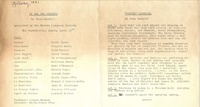 Programme for 'Le bal des voleurs', performed in 1971
Programme for 'Le Bal des voleurs', a comedy by Jean Anouilh, performed by UCG students in 1971 in An Taibhdhearc theatre in Galway.
-
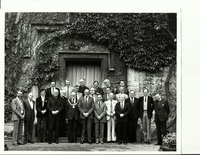 Governing Body of UCG, 1980-83/ Coiste Rialaithe Choláiste na hOllscoile, 1980-83
<p>An official photograph of the members of the Governing Body / Coiste Rialaithe in office for the period 1 February 1980 – 31 January 1983, together with the two senior administrative officers servicing it. Missing are 3 members, viz. <a href="https://en.wikipedia.org/wiki/Mich%C3%A9al_%C3%93_hUiginn" target="_blank" rel="noreferrer noopener">Mícheál Ó hUiginn</a> (representing Galway Corporation ?), and two others.<br />
Pictured, from left to right: <br />
<em>Third row</em>: Seán McEvoy (Mayo Co. Council), Professor <a href="https://en.wikipedia.org/wiki/Martin_L._Newell" target="_blank" rel="noreferrer noopener">Martin L. Newell</a> (graduates’ nominee), Most Rev. <a href="https://en.wikipedia.org/wiki/Michael_Harty_(bishop)" target="_blank" rel="noreferrer noopener">Michael Harty</a> (Bishop of Killaloe; Clare Co. Council nominee). <a href="https://prabook.com/web/michael_patrick_bobby.curran/361046" target="_blank" rel="noreferrer noopener">Michael P. J. (‘Bobby’) Curran</a> (graduates’ nominee), Séamus Ó Cathail (Rúnaí Acadúil / Academic Secretary), Dioraí Ó Coirbhin (Rúnaí-Sparánaí / Secretary-Bursar).<br />
<em>Second row</em>: An tOllamh <a href="https://www.ainm.ie/Bio.aspx?ID=1722" target="_blank" rel="noreferrer noopener">Eustás Ó Héideáin,</a> Dr <a href="https://issuu.com/ballymoteheritagegroup/docs/the-corran-herald-issue-54-2021-2022/s/16699626" target="_blank" rel="noreferrer noopener">Hubert McDermott </a>(coopted), Professor <a href="https://www.maths.tcd.ie/pub/ims/bull69/Flavin.pdf" target="_blank" rel="noreferrer noopener">James N. Flavin</a> (Academic Council nominee), <a href="https://www.ainm.ie/Bio.aspx?ID=1848&AspxAutoDetectCookieSupport=1" target="_blank" rel="noreferrer noopener">Cathal Mac Gabhann</a> (Príomhfheidhmeannach Údarás na Gaeltachta; NUI Senate nominee), <a href="http://www.jstor.org/stable/2072016" target="_blank" rel="noreferrer noopener">Christopher J. Townley</a> (Librarian; elected by graduates).<br />
<em>Front row</em>: An tOllamh Déaglán Ó Caoimh (J.D. O’Keeffe) (Registrar, elected by Academic Council), Patrick Briody (Leitrim Co. Council), Séamus Scott (Roscommon Co. Council), Most Rev. <a href="https://en.wikipedia.org/wiki/Joseph_Cunnane" target="_blank" rel="noreferrer noopener">Joseph Cunnane</a> (Archbishop of Tuam; nominee of Minister of Education), Eugene Henry (Sligo Co. Council), An Dr <a href="https://en.wikipedia.org/wiki/Colm_%C3%93_hEocha" target="_blank" rel="noreferrer noopener">Colm Ó hEocha</a> (Uachtarán), Professor <a href="https://exhibitions.library.universityofgalway.ie/admin/item/13717" target="_blank" rel="noreferrer noopener">George F. Imbusch</a> (elected by Academic Council), Professor <a href="https://www.dib.ie/biography/dunican-laurence-kieran-l-kieran-a2842" target="_blank" rel="noreferrer noopener">L. Kieran Dunican</a> (elected by Academic Council), <a href="https://president.ie/en/the-president/michael-d-higgins" target="_blank" rel="noreferrer noopener">Michael D. Higgins</a> (Galway Co. Council), Professor <a href="https://www.symposiummaternalhealth.com/speaker/eamon-odwyer/" target="_blank" rel="noreferrer noopener">Eamonn O’Dwyer</a> (coopted), An Dr <a href="https://en.wikipedia.org/wiki/Iogn%C3%A1id_G._%C3%93_Muircheartaigh" target="_blank" rel="noreferrer noopener">Iognáid Ó Muircheartaigh</a> (elected by academic staff), Right Rev. <a href="https://www.irishtimes.com/opinion/bishop-john-coote-duggan-1.300540" target="_blank" rel="noreferrer noopener">John Coote Duggan</a> (Bishop of Tuam, Killala and Achonry, nominee of Minister of Education).</p>
-
Michael Kane's account of a French play in An Taidhbhearc
-
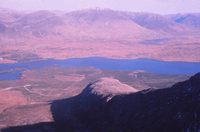 The Horseshoe, a view of Derryclare Lough from the top of Derryclare
Derryclare Mountain (677m) lies at the south-eastern end of the Horseshoe ridge. This view of Derryclare Lough is taken looking south-east from near the summit.
This is one of 7 photographs taken during a day in 1971 or 1972 that the UCG Mountaineering Club spent hiking in the southern Twelve Bens. For the other 6 photographs see 'A day on the Horseshoe ridge'.
In 2022 Michael Kane gave a vivid account of this particular outing and the general activities of the Mountaineering Club in its early days. See 'Michael Kane's account of the Mountaineering Club c. 1971-72'.
The Mountaineering Club was established in 1970. Its membership in 2023 was over 1000.(Mountaineering Club, 'About us'). The Library archives contain a number of documents relating to the club. These were placed in the care of the University by Aengus Finnegan, Secretary 2010-2011 (Mountaineering Club, 'Archive').
The Glencoaghan (Gleann Chóchan) Horseshoe ridge is approximately 16 km long. Its peaks include 7 of the major bens: Binn Leitrí (Benlettery, 577m), Binn Ghleann Uisce (Ben Glenisky, 516m), Binn Gabhar (Bengower, 664m), Binn Bhraoin (Benbreen, 691m), An Bhinn Dubh (Bencollaghduff, 696m), Binn Chorr (Bencorr, 711m) and Binn Doire Chláir (Derryclare, 677m). It also comprises some subsidiary bens, among them Binn an Choire Bhig (Benncorrbeg, 577m) and Binn an tSaighdiúra (653m).
-
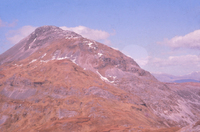 Benbaun, the highest peak of the Twelve Bens in all its glory
A view of Benbaun (Benbawn or An Bhinn Bhán ), at 729m the highest of the Twelve Bens, seen from the Horseshoe ridge.
This is one of 7 photographs taken during a day in 1971 or 1972 that the UCG Mountaineering Club spent hiking in the southern Twelve Bens. For the other 6 photographs see 'A day on the Horseshoe ridge'.
In 2022 Michael Kane gave a vivid account of this day on the Horseshoe and the general activities of the Mountaineering Club. See 'Michael Kane's account of the Mountaineering Club c. 1971-72'.
The Mountaineering Club was established in 1970. Its membership in 2023 was over 1000. (Mountaineering Club, 'About us'). The Library archives contain a number of documents relating to the club. These were placed in the care of the University by Aengus Finnegan, Secretary 2010-2011 (Mountaineering Club, 'Archive').
-
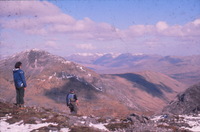 The Horseshoe in snow with Benbaun on the left
Two members of the UCG Mountaineering Club on the Horseshoe ridge with Benbaun, the highest of the Twelve Bens, in the background.
This is one of 7 photographs taken during a day in 1971 or 1972 that the UCG Mountaineering Club spent hiking in the southern Twelve Bens. For the other 6 photographs see 'A day on the Horseshoe ridge'.
In 2022 Michael Kane gave a vivid account of this day on the Horseshoe and the general activities of the Mountaineering Club. See 'Michael Kane's account of the Mountaineering Club c. 1971-72'.
The Mountaineering Club was established in 1970. Its membership in 2023 was over 1000.(Mountaineering Club, 'About us'). The Library archives contain a number of documents relating to the club. These were placed in the care of the University by Aengus Finnegan, Secretary 2010-2011 (Mountaineering Club, 'Archive').
The Glencoaghan (Gleann Chóchan) Horseshoe ridge is approximately 16 km long. Its peaks include 7 of the major bens: Binn Leitrí (Benlettery, 577m), Binn Ghleann Uisce (Ben Glenisky, 516m), Binn Gabhar (Bengower, 664m), Binn Bhraoin (Benbreen, 691m), An Bhinn Dubh (Bencollaghduff, 696m), Binn Chorr (Bencorr, 711m) and Binn Doire Chláir (Derryclare, 677m). It also comprises some subsidiary bens, among them Binn an Choire Bhig (Benncorrbeg, 577m) and Binn an tSaighdiúra (653m).
Benbaun, Benbawn or An Bhinn Bhán (729m) is not part of the Horseshoe.
-
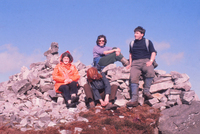 The Horseshoe, a well-earned rest for the group, 1971 or 1972
Members of the UCG Mountaineering Club taking a rest on the Horseshoe ridge during a day spent hiking in the southern Twelve Bens.
This is one of 7 photographs taken during an outing in 1971 or 1972. For the other 6 photographs see 'A day on the Horseshoe ridge'.
In 2022 Michael Kane gave a vivid account of this day on the Horseshoe and the general activities of the Mountaineering Club. See 'Michael Kane's account of the Mountaineering Club c. 1971-72'.
The Mountaineering Club was established in 1970. Its membership in 2023 was over 1000.(Mountaineering Club, 'About us'). The Library archives contain a number of documents relating to the club. These were placed in the care of the University by Aengus Finnegan, Secretary 2010-2011 (Mountaineering Club, 'Archive').
The Glencoaghan (Gleann Chóchan) Horseshoe ridge is approximately 16 km long. Its peaks include 7 of the major bens: Binn Leitrí (Benlettery, 577m), Binn Ghleann Uisce (Ben Glenisky, 516m), Binn Gabhar (Bengower, 664m), Binn Bhraoin (Benbreen, 691m), An Bhinn Dubh (Bencollaghduff, 696m), Binn Chorr (Bencorr, 711m) and Binn Doire Chláir (Derryclare, 677m). It also comprises some subsidiary bens, among them Binn an Choire Bhig (Benncorrbeg, 577m) and Binn an tSaighdiúra (653m).
-
CARLOS, Mary J.
-
LARKIN, Margaret M., née Carlos
-
PRENDERGAST, William Hillary
-
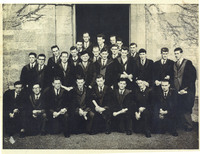 Engineering Graduate Class, 1956
In this photograph of the Engineering Graduation Class of 1956 Professor W.H. Prendergast (third row, fourth from left) is seen surrounded by graduands.
William Hillary Prendergast took up the Professorship of Civil Engineering in 1947, vacated on health grounds by Professor Frank Sharman Rishworth. Professor Prendergast obtained degrees in Engineering and Science from UCG in 1915. He was involved with the Eastern Bengal-Assam Railway from 1920, as well as the railway line between Basra and Baghdad during WWII, details of which are further described by Paul Duffy. He died suddenly on 22 July 1957.
Key to people, left to right:
Back row: Paddy Hoare, Con McCawley, Joe Kinneen, George Lee, and one unidentified.
Third row: Frank Furey, Joe Dalton, Tom O’Sullivan, Des Sweeney, Gerry Mahony.
Second row: John Considine, Joe Curley, Brian Murphy, Prof, William ('Willie') Prendergast, Seán McDermott, Michael Lee, Tom Codyre, Pat Flood, Ernie Hession.
Front row: Michael Higgins, Pat Keating, Dickie Roche, Tom Leyden, Enda Conway, Seamus Martin, Johnny Donnellan, Séamus Horan.
-
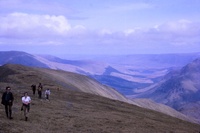 Mountaineering Club near the top of Mweelrea, c. 1976-1978
A small group of the Mountaineering Club's members climbing towards the summit of Mweelrea (Cnoc Maol Réidh), one of the Twelve Bens in Connemara. At 814m its summit is the highest point in Connacht.
In 2022 Michael Kane gave a vivid account of the activities of the Mountaineering Club in its early days. See 'Michael Kane's account of the Mountaineering Club c. 1971-72'.
The Mountaineering Club was established in 1970. Its membership in 2023 was over 1000.(Mountaineering Club, 'About us'). The Library archives contain a number of documents relating to the club. These were placed in the care of the University by Aengus Finnegan, Secretary 2010-2011 (Mountaineering Club, 'Archive').
-
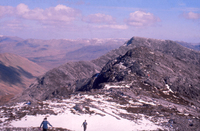 Half-way point, the ridge between Benbreen and Bencollaghduff, 1971 or 1972
One of 7 photographs taken during a day the UCG Mountaineering Club spent in the southern Twelve Bens in 1971 or 1972. For the other 6 photographs see 'A day on the Horseshoe ridge'.
In 2022 Michael Kane gave a vivid account of this day on the Horseshoe and the general activities of the Mountaineering Club. See 'Michael Kane's account of the Mountaineering Club c. 1971-72'.
The Mountaineering Club was established in 1970. Its membership in 2023 was over 1000.(Mountaineering Club, 'About us'). The Library archives contain a number of documents relating to the club. These were placed in the care of the University by Aengus Finnegan, Secretary 2010-2011 (Mountaineering Club, 'Archive').
The Glencoaghan (Gleann Chóchan) Horseshoe ridge is approximately 16 km long. Its peaks include 7 of the major bens: Binn Leitrí (Benlettery, 577m), Binn Ghleann Uisce (Ben Glenisky, 516m), Binn Gabhar (Bengower, 664m), Binn Bhraoin (Benbreen, 691m), An Bhinn Dubh (Bencollaghduff, 696m), Binn Chorr (Bencorr, 711m) and Binn Doire Chláir (Derryclare, 677m). It also comprises some subsidiary bens, among them Binn an Choire Bhig (Benncorrbeg, 577m) and Binn an tSaighdiúra (653m).
-
 Michael Kane's account of the Mountaineering Club c. 1971-1972
An account of the activities of the UCG Mountaineering Club c. 1971-1972, and a day spent hiking in the Twelve Bens. Note: The illustrations named in the account are photos take on that day and, with others taken on other outings, are included in this collection.
-
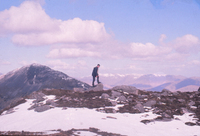 Michael Kane on a ridge with Benbaun in background, 1971 or 1972
Michael Kane is seen here on the Horseshoe ridge with Benbaun, the highest of the Twelve Bens, in the background. This is one of 7 photographs taken during a day in 1971 or 1972 that the UCG Mountaineering Club spent hiking in the area. For the other 6 photographs see 'A day on the Horseshoe ridge'.
In 2022 Michael Kane gave a vivid account of this particular outing and of the general activities of the Mountaineering Club in its early days. See 'Michael Kane's account of the Mountaineering Club c. 1971-72'.
The Mountaineering Club was established in 1970. Its membership in 2023 was over 1000.(Mountaineering Club, 'About us'). The Library archives contain a number of documents relating to the club. These were placed in the care of the University by Aengus Finnegan, Secretary 2010-2011 (Mountaineering Club, 'Archive').
The Glencoaghan (Gleann Chóchan) Horseshoe ridge is approximately 16 km long. Its peaks include 7 of the major bens: Binn Leitrí (Benlettery, 577m), Binn Ghleann Uisce (Ben Glenisky, 516m), Binn Gabhar (Bengower, 664m), Binn Bhraoin (Benbreen, 691m), An Bhinn Dubh (Bencollaghduff, 696m), Binn Chorr (Bencorr, 711m) and Binn Doire Chláir (Derryclare, 677m). It also comprises some subsidiary bens, among them Binn an Choire Bhig (Benncorrbeg, 577m) and Binn an tSaighdiúra (653m).
-
Ó NUALLÁIN, Labhrás
-
IMBUSCH, George Francis ('Frank')
-
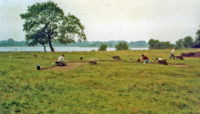 Archaeological excavation at Ballaghkeeran, 1982
The trial excavation pictured here was conducted by Professor Thomas ('Tom') Fanning of the Archaeology Department, UCG, in 1982. His report gives the following details:
'Co. Westmeath 1982. 184. Ballaghkeeran Little, Athlone (12N 073445). T. Fanning of Department of Archaeology, University College, Galway, excavated a number of trial trenches at a fortified promontory on Lough Ree in the R. Shannon. The possibility that the site was a Viking-type longphort was borne in mind due to the mid 9th- and early l0th-century references to a Viking fortification on the Lough.
Excavation of the earthen bank on the landward side of the promontory showed it to have been of a substantial nature composed of a fine sandy subsoil redeposited on the original ground surface. A charcoal stain close to the inner edge of this bank was sampled for a radiocarbon determination. The cuttings within the promontory exposed two shallow parallel trenches c.10m apart. These features, detected in a magnetometer survey by R. Doggart of Queen's University, Belfast, yielded a little charcoal but no finds or other evidence of occupation - the earth had been considerably disturbed by rabbit burrowings and ridge-and-furrow cultivation. Some iron slag and fragments of fired clay were found in a cutting made directly S. of the promontory in a large banked-up hollow beside the mouth of the Breensford River' (T. Fanning, 1983).
Tom Fanning conducted numerous other excavations. For one of these, undertaken at Rinnaraw, Co. Donegal, in 1987-92, there is, in addition to a later scientific report (Comber et al., 2006), a vivid account from the student fieldworker's perspective, provided by Robert Chapple, archaeologist, in his blog (Chapple, 2014).
