-
The Claddagh
Three boats are moored at a quay. They are sailing boats with upright masts. Two girls are standing on the quay. Up to ten cabins are visible. A high wall and pillar with iron rails are visible on the right, with trees growing inside the wall.
-
Cabins in the Claddagh
View of several dwelling houses in The Claddagh, Galway City. The houses all single story 'cabins'. Each house has a thatched roof and a chimney. A group of over 10 children are visible outside one house., a solitary women is visible outside another house, a woman with her back to the camera and two children are visible outside another house. These dwellings remained as homes in the Claddagh area of Galway until the 1930s when they were demolished as unfit habitation.
-
Aran Men carrying a Canvas Currach
Three men are holding a currach aloft on the seashore. Four more currachs, as well as more people, are visible in the background. Currachs are wooden framed boats covered in tanned leather. They are propelled by oars and are extremely light and fast. Until the middle of the twentieth century they would have been the main form of transport for the population of the Aran Islands, where this photograph appears to have been taken.
-
The Lass of Aughrim
The singing of ‘The Lass of Aughrim’ in ‘The Dead’ is one of the key narrative elements on which the story’s multiple arcs and themes depend. Although the traditional Irish version of the song has its origins in an older Scottish air, ‘The Lass of Loch Royal’, the Irish adaptation ‘The Lass of Aughrim’ would become a well-known traditional song in Ireland, a folk song heaving with a sense of “the deep, oral, Irish-language, Jacobite, Gaelic past of the west of Ireland”, as Kevin Whelan describes it. In ‘The Dead’, it is the tenor Bartell D’arcy’s singing of the song that stirs up Gretta Conroy’s memories of the young lover she lost to death in her teenage years. Gretta’s exposure to these memories will lead, in turn, to a devastating epiphany for her husband Gabriel at the story’s close. James Joyce associated the traditional song with his wife Nora, famously describing it as “your song” in a letter in 1909. During the same trip to Ireland, he had Nora’s mother sing the song to him while visiting her in the Barnacles’ family home in Galway.
-
‘Irish Melodies’ (Thomas Moore)
Moore's published collection of songs were immensely popular in late 19th century Ireland and during the early 20th century period during in which 'The Dead' is set. Music and singing are central narrative and thematic elements within ‘The Dead’. Joyce makes passing reference to the Irish Melodies both in the story and elsewhere in Dubliners. Indeed, Richard Ellman notes that a reference to Moore’s ‘O Ye Dead’ in one of Stanislaus Joyce’s regular letters to his brother became, as he describes it, one of Joyce’s “impulsions” toward the writing of ‘The Dead’. In the letter, sent to Joyce in 1905 while he and his wife Nora lived in Trieste, Stanislaus commends a recent performance of the song in Dublin by the Irish baritone Plunket Greene. Joyce asked Stanislaus to send him the words of the song. (See Ellman, James Joyce, p.244.)
While no explicit reference to ‘O Ye Dead’ occurs in Joyce’s short story, a number of commentators, Kevin Whelan among them, identify the way in which certain elements of Moore’s lyric are evoked enigmatically in ‘The Dead’. For instance, the ghost of Michael Furey – who, among other things, is associated with the cold snow that falls outside on the night of the party – can be taken as a reference to the fate of the dead Irish soldiers in Moore’s song who, having died on foreign soil, are fated to haunt their loved ones and former dwelling-places in Ireland or else to retreat to the Arctic surroundings of Mount Hecla. As Whelan puts it, “Moore’s master image is of the dead condemned to glacial cold, ‘to freeze ‘mid Hecla’s snow.’” That Moore’s song invokes the fate of ‘the Wild Geese’ is significant in that it epitomises the way in which Joyce weaves the ghosts of Irish colonial history into ‘The Dead’. The Battle of Aughrim, for instance, is evoked indirectly via the narrative significance of the traditional song ‘The Lass of Aughrim’.
The Abbey Theatre’s 2012 adaptation of the short story was notable for opening with a remarkable rendition of Moore's song.
-
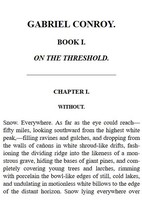 Gabriel Conroy (Bret Harte)
Harte’s novel recounts the story of a pilgrim party trapped by a snowstorm in the Sierra mountain range in California and is, in part, inspired by the historical details of the Donner Party, a group of migrants who – trapped by snow in the Sierras on their journey West in 1846/7– reverted to cannibalism to survive. Joyce names his protagonist in ‘The Dead’ after the titular character of Harte’s novel, but there are further resonances between the two works. The novel opens with a dense and vivid passage describing a blizzard, “Snow. Everywhere. As far as the eye could reach […] and still falling.” Snow and snowfall play both a tonal and thematic role in Joyce’s short story, too. At the close of ‘The Dead’, in one of the most acclaimed prose passages in literature, Joyce employs an image of a dense blanket of snow that, in its faint but insistent falling, comes to absorb and occlude all of the characters and historical events referenced within the story. Gerhard Friedrich, who first drew attention to the allusion to Harte, highlights the resonance between the passage that opens Harte’s book and the passage which closes Joyce’s story. More recently, digging deeper into the resonances that Joyce may have wished to elicit from Harte’s novel, Bonnie Roos makes a compelling argument that Joyce alludes to Harte’s tale of cannibalisation in order to address obliquely the oppressive historical spectre of the Famine. Similarly, Nikhil Gupta argues that – in alluding to Harte – Joyce’s target is the nationalist sentiment of the day and its romantic exoticisation of ‘the West’.
-
 “the world will not willingly let die” (John Milton)
A citation of a phrase from John Milton's ‘The Reason of Church-Government Urg’d Against Prelaty’ (1642), recorded by James Joyce in the 'commonplace' notebook he maintained in the years 1903-04. The notebook is generally referred to as the Paris-Pola Notebook.
This was a period when Joyce (and his wife, Nora Barnacle) settled and resettled in locations throughout Europe, taking in spells in Paris, Pola (Croatia), and Trieste (then a major port-city in the Austro-Hungarian Empire; today part of Italy).
Many of the entries within the notebook would return in Joyce’s later fiction, particularly in Ulysses. One very short inscription, in which Joyce paraphrases a line from John Milton’s pamphlet ‘The Reason of Church-Government Urg’d Against Prelaty’ (1642), is notable for later being channelled into the famous dinner speech delivered by the protagonist of ‘The Dead’, Gabriel Conroy. The Milton line in question – “the world will not willingly let die” – is notable for afterwards having been struck through by Joyce.
This strike-through perhaps indicated Joyce’s dissatisfaction with the creative idea for which he had jotted down the citation in the first place. (Or perhaps – if Joyce were recalling the citation from memory – it indicates an uncertainty that he was recalling it correctly.) In any event, that the citation is struck through is in itself intriguing, as it anticipates and encapsulates the tonal and thematic qualities of ‘The Dead’, in which Joyce is – among other things – very much concerned with the idea of the spectral, that which remains in spite of its passing, termination, or occlusion. Though Joyce strikes through his citation of Milton here, it nevertheless remains legible on the page and, in spite of its occlusion, the citation will return in ‘The Dead’.
The scrawled citation is also interesting because it encapsulates the core theme within the story: that of the tension between past and present, the dead and those elements that linger beyond death. In his religious pamphlet, Milton expressed in passing his hope that his poetic works would outlive him, having attained a value that future generations will recognise and “not willingly let die”. In Joyce’s story, an unwillingness to let things die – to let the dead rest, to dispel the ghosts of memory – is rife.
-
 Photo Album of European Trip to accompany Memoire
Panel 13 - Trip to Europe 1925
-
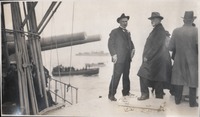 Photo of O'Shaughnessy at a port
Panel 13 - Trip to Europe 1925
-
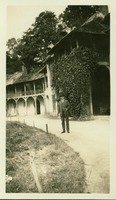 Photo of O'Shaughnessy during trip to Europe
Panel 13 - Trip to Europe 1925
-
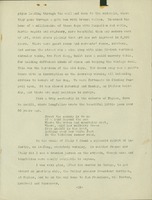 Memorandum on European trip of M. M. O'Shaughnessy 2
Panel 13 - Trip to Europe 1925
-
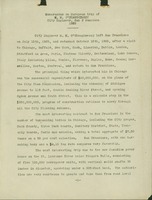 Memorandum on European trip of M. M. O'Shaughnessy 1
Panel 13 - Trip to Europe 1925
-
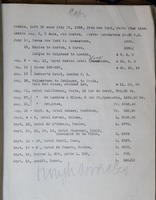 My Trip Abroad - Itinerary
Panel 13 - Trip to Europe 1925
-
 My Trip Abroad - cover image
Panel 13 - Trip to Europe 1925
-
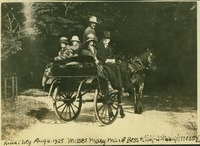 O'Shaughnessy and daughters on horse and cart in Killarney
Panel 13 - Trip to Europe 1925
-
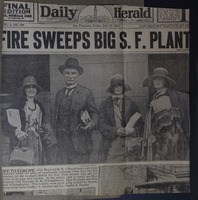 newspaper cutting
Panel 13 - Trip to Europe 1925
-
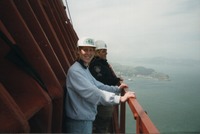 Golden Gate holiday photograph 1990s 6
panel 12 - Golden Gate & Oakland Bay Bridges
-
 Golden Gate holiday photograph 1990s 5
Golden Gate & Oakland Bay Bridges
-
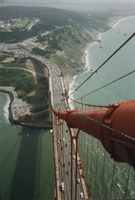 Golden Gate holiday photograph 1990s 3
Panel 12 - Golden Gate & Oakland Bay Bridges
-
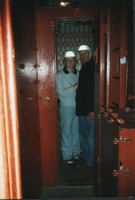 Golden Gate holiday photograph 1990s 4
Panel 12 - Golden Gate & Oakland Bay Bridges
-
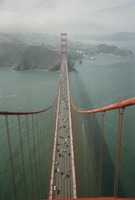 Golden Gate holiday photograph 1990s 2
Panel 12 - Golden Gate & Oakland Bay Bridges
-
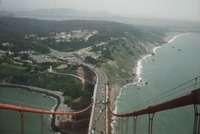 Golden Gate holiday photograph 1990s 1
Panel 12 - Golden Gate & Oakland Bay Bridges
-
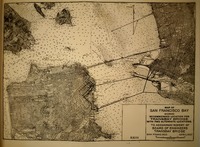 Map of San Francisco Bay
Panel 12 - Golden Gate & Oakland Bay Bridges
Map of San Francisco Bay showing recommended location for Transbay Bridge with two alternate locations to accompany report of Board of Engineers Transbay Bridge
-
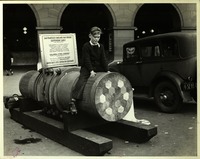 San Francisco-Oakland Bay Bridge under construction 3
Panel 12 - Golden Gate & Oakland Bay Bridges
-
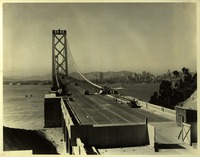 San Francisco-Oakland Bay Bridge under construction 2
Panel 12 - Golden Gate & Oakland Bay Bridges