A University in War & Revolution 1913-19 The Galway Experience / Ollscoil In Am Comhraic 1913-19 Cogadh agus Réabhlóid
Item set
Items
-
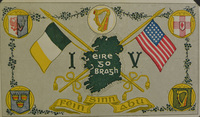 Irish Volunteers Postcard (private collection)
The emergence of militant nationalism in the aftermath of the 1916 Rebellion saw two years of guerrilla warfare erupt across Ireland with wide scale disruption to everyday life. A cadre of young educated nationalists – many of whom had gained county council scholarships to attend university – went on to play a pivitol role in the new state.
-
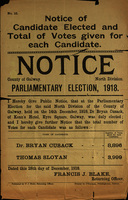 1918 General Election and establishment of Dail Eireann (NUIG)
Brian Cusack was a medical graduate of UCG and was elected to the first Dail as a Sinn Fein representative for North Galway in 1918. He was a founder member of the Volunteers in Galway and was deported in May 1918, and again during the War of Independence.
-
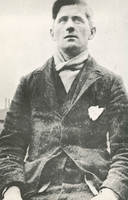 Liam Ó Briain, a participant in the Easter Rising in Dublin, was appointed Professor of Romance Languages at UCG shortly after his release from Frongoch
-
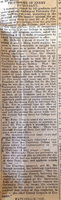 The Galway Urban District Council was highly critical of the influence of ‘professors of enemy nationality’ in the University.
-
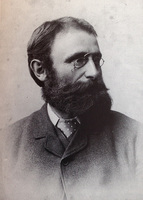 Professor Valentine Steinberger, College Librarian and Professor of Romance Languages, died shortly after his release from prison in 1916
-
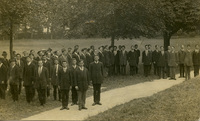 University College Galway’s Irish Volunteer Company, circa 1918
-
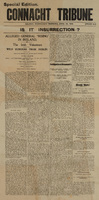 Connacht Tribune, one page emergency edition. "Is it Insurrection?"
Note accuracy of reports.
-
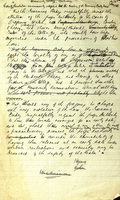 A draft resolution, written in haste by the University’s Governing Council, following the arrest of a number of students and staff during Easter Week
-
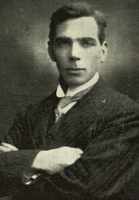 Brian Cusack was a medical graduate of UCG and was elected to the first Dail as a Sinn Fein representative for North Galway in 1918. He was a founder member of the Volunteers in Galway and was deported in May 1918, and again during the War of Independence.
-
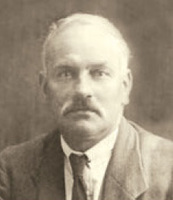 George Nicholls, the Irish Republican Brotherhood centre for Galway town, was arrested during the Rebellion
-
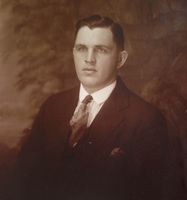 Michael O’Dea (1900-1981), Clarinbridge
Prior to the Easter Rising in 1916 Michaal O'Dea had assisted in the escape of Liam mellows’s deputy, Alfred Monaghan from RIC surveillance in Galway town. He subsequently took part in the Easter Rebellion with the Clarinbridge Company. He was arrested during 1920 and interned until December 1921. During the Civil War he joined the anti-Treaty IRA.
-
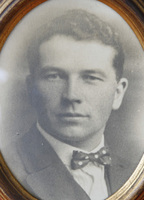 Larry Lardiner (1882-1936), Church Street, Athenry
Laurence Lardiner served as Officer Commanding of the Galway Brigade prior to and during Easter 1916 and evaded arrest after the surrender. From May 1916 to June 1917 he served in Belfast until returning to his post with the Galway Brigade. He was arrested and imprisoned from March 1918 to March 1919 in Galway, Belfast and Lincoln (England) prisons. He was later imprisoned in Wormwood scrubs where he participated in a hunger strike. He took no part in the Civil War.
-
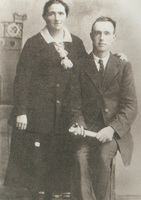 Katie Armstrong, nee Glynn (1885-1977), Caherwilder, Kilcolgan
Katie was branch president and founding member of Cumann na mBan at Killeeneen and took an active part in the 1916 Rebellion. Throughout Easter Week she organised first aid, cooking and related tasks. She remained active throughout the period and joined the anti-Treaty forces.
-
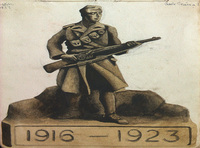 A drawing in the prison notebook of Jack Comer, a medical student at UCG, who was later imprisoned for his revolutionary activities
-
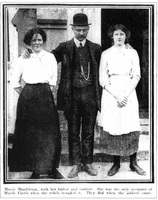 Maisie Shackleton and her parents were living in Moyode Castle when it was commandeered by rebels
-
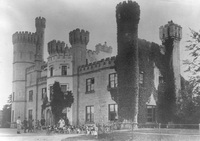 Over 600 rebels garrisoned Moyode Castle near Athenry during Easter Week
-
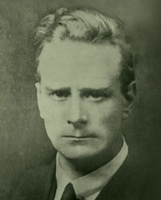 Liam Mellows (1892-1922), was 23 years old when he led the Galway rebels in 1916
-
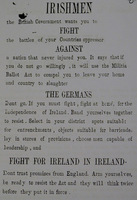 Republican anti-recruitment flyer
-
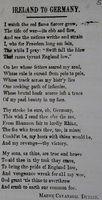 Republican anti-recruitment flyer
-
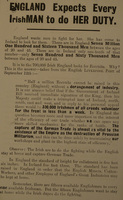 Republican anti-recruitment flyer
-
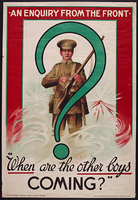 When are the other boys coming?
Recruitment posters used sophisticated imagery and symbolism to appeal to the the rural community in particular
-
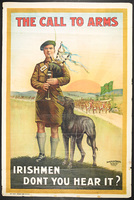 Irishmen don't you hear it
Recruitment posters used sophisticated imagery and symbolism to appeal to the the rural community in particular
-
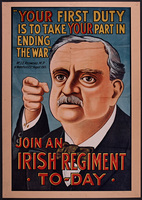 Join an Irish regiment today
Recruitment posters used sophisticated imagery and symbolism to appeal to the the rural community in particular
-
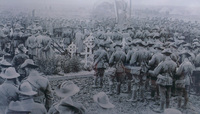 Soldiers paying their respects at the graves of their fallen comrades on the Western Front circa 1915
-
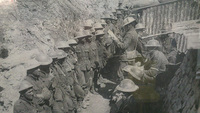 Men from Galway fought in many regiments. This photo shows soldiers of the Royal Irish Regiment at the Somme in July 1916
